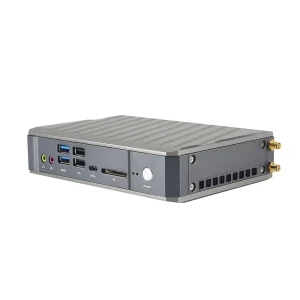
Direct access to state-of-the-art laptop assemblies, fanless micro computers, and industrial micro hosts engineered for enterprise deployments.
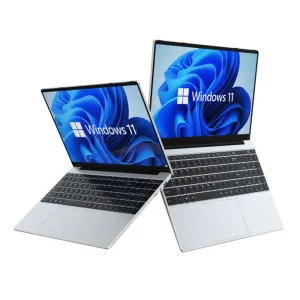
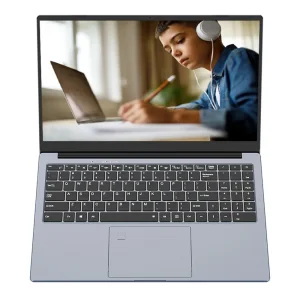
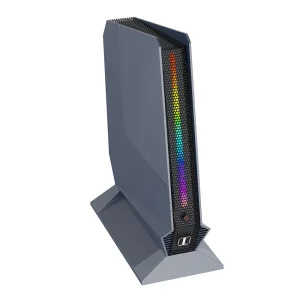
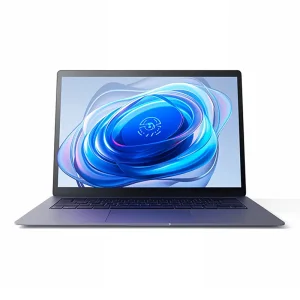
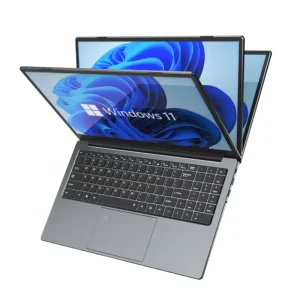
Modern laptop casing design has transitioned from basic containment to a critical sub-system directly influencing thermal performance, structural durability, and brand perception.
The transition from ABS plastics to light-weight, high-tensile metal alloys is defining the current generation of laptop casings. Magnesium-aluminum (Mg-Al) alloys and Lithium-aluminum formulations are heavily favored by elite enterprises. These materials offer an exceptional strength-to-weight ratio, allowing engineers to target wall thicknesses under 0.8mm while maintaining rigid torsional strength and resistance to flex.
Tooling and machining methods dictate the quality of mechanical fits. Computer Numerical Control (CNC) milling from single-block ingots guarantees ultra-precise clearances for internal PCBs and thermal modules. Conversely, progressive-die stamping optimizes cost-efficiency for mid-tier configurations without sacrificing structural alignment. Modern production runs combine both techniques for optimized price-to-performance metrics.
Surface treatments are no longer purely aesthetic. Micro-arc oxidation (MAO), electrophoretic deposition (EPD), and advanced anodization form passive ceramic barriers. These coatings mitigate galvanic corrosion, prevent surface scratching from everyday wear, and optimize radiative heat dissipation from the chassis surface, lowering internal skin temperatures by up to 3°C.
Procurement directors and systems integrators navigate complex engineering specifications when sourcing notebook components for military, medical, and specialized industrial deployments.
Industrial clients look beyond standard office shells. Heavy-duty field deployments demand compliance with MIL-STD-810H standards, which require drop testing from 1.2 meters, resistance to operational vibration, dust ingress protection (IP ratings), and structural integrity under thermal shock. High-toughness polymer corner guards and structural internal cross-beams are key structural engineering additions here.
Modern CPUs and GPUs draw considerable power (TDP). Modern casings act as secondary heatsinks. By integrating dedicated aluminum-alloy vapor chamber mounting zones and heat pipe retention clips directly into the structural frame, casing architectures ensure rapid dissipation pathways, preventing thermal throttling during intensive continuous workloads.
Electromagnetic Interference (EMI) and Radio Frequency Interference (RFI) can compromise highly sensitive instruments in clinical healthcare or telecommunication centers. Premium casings employ conductive internal plating, metal mesh gaskets, and ground-contact fingers to block signal leakage, complying with FCC Class B and CE regulations.
Traditional Tier-1 laptop manufacturers restrict access with massive minimum order quantities (MOQs), often demanding 10,000+ units per production run. Small-to-medium enterprises (SMEs) and specialized systems integrators require a nimble partner. The ability to execute tooling modifications, customize IO port placements, and alter structural mounting plates at low MOQs is the deciding factor in securing reliable regional and global hardware supply chains.
How modern industrial clusters in Shenzhen and Guanlan integrate mechanical engineering, supply networks, and agile manufacturing paradigms to deliver exceptional product quality.
Situated in the heart of Shenzhen's technology corridor, Guanlan represents the pinnacle of vertical industrial integration. Within a 10-kilometer radius, factories have direct access to raw alloy suppliers, CNC tooling labs, precision surface treatment specialists, component distributors, and automated testing facilities. This geographical clustering shrinks development timelines and logistical costs, yielding unprecedented speed-to-market.
Under Factory 4.0 guidelines, computer-aided design (CAD) blueprints transition to physical magnesium-alloy prototypes in record time. Using advanced tooling suites, engineering teams can adjust structural wall structures, run finite element analysis (FEA) stress tests, and verify thermals without committing to expensive tooling runs. This significantly reduces developmental friction for small-to-medium enterprise brands.
Deep customization capabilities crafted to remove the traditional barriers faced by hardware innovators, custom integrators, and regional brands.
In Shenzhen, a city where technology and innovation intertwine, countless entrepreneurs set out every day with the dream of changing the world. They may want to subvert the home audio-visual experience with a mini host, or use customized laptops to give wings to education in remote areas, or use industrial computers to promote the intelligent transformation of factories... But the reality is often: the needs of small brands are always overwhelmed by the standardization of the big market.
So, Jinghong was born. Founded in 2014 with a simple belief—"No matter how small the demand is, it deserves to be taken seriously." For 9 years, we have been deeply involved in the field of customization. From mini hosts to industrial computers, from laptops to fanless embedded devices, Jinghong has never stopped exploring how to use technology to "reduce the burden" of entrepreneurs' creativity.
At Jinghong, these are not problems. Our production line has customized palm-sized medical terminals for rural clinics in Europe, built reinforced notebooks for desert environments for start-ups in the Middle East, and designed one-hundred-dollar all-in-one computers for African educational institutions... Behind the annual sales of 100,000 units, there are 100,000 unique stories.

● There is no "minimum order quantity" threshold, and 1 unit can be customized;
● From design sketches to finished product delivery, engineers will fight side by side with you throughout the process;
● The technical endorsement of Intel's strategic partners allows you to use a "small budget" to get the hardware performance of a "big brand".
● The self-developed heat dissipation structure allows the mini host to run stably for 50,000+ hours;
● 72 hours of rigorous testing covers high and low temperatures, vibration, and long-term load;
● 3-year warranty commitment, fault response time <24 hours.
● We remember the first order of every customer;
● Alex from Russia used our industrial computers to realize the intelligent transformation of gas stations, from 10 trials to annual purchases of 2,000 units;
● Maria from Spain used customized laptops to open up the education market for disabled children, and we optimized the one-handed operation interaction for her.

Before each device leaves the factory, engineers will affix a unique QR code - scan it and you can see the birth log of this machine: from the source of chip procurement to the last quality inspection process, even including the signature of the assembly technician. Because we believe: transparency is the starting point of trust.
If you are also tired of "making do", if you want your product to truly become an extension of the brand, welcome to the Jinghong factory in Guanlan, Shenzhen. Touch the antifreeze keyboard customized for polar scientific research, try the cool host designed for e-sports hotels, and you will find that the ambition of small brands should be listened to seriously.
Jinghong, customization is not just about hardware, but also the confidence of entrepreneurs to move forward. Your needs are our most important orders.
Analyzing specific deployments where customized casing configurations and hardware designs resolve challenging physical conditions.
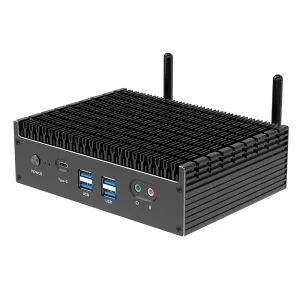
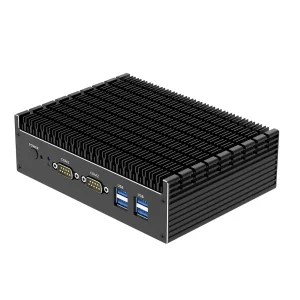
Outdoor kiosks require industrial micro hosts (like the MU02 series) that can survive extreme temperature spikes and remain dustproof. Protective metal casings prevent ingress of hazardous fumes, while fanless architecture eliminates spark hazards and mechanical component wear, operating continuously for 24/7 automation.
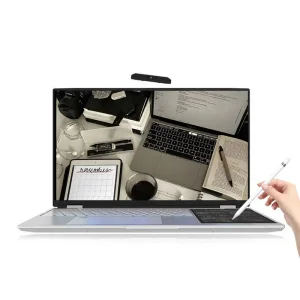
Educational machines for disabled learners or dual-screen study laptops require unique structural considerations. Reinforced hinges (tested past 50,000 cycles) allow dual-panel deployments, and casing materials must withstand impact while integrating child-friendly, non-toxic matte coatings and localized physical buttons for one-handed operation.
High-end gaming systems and hotel entertainment hubs demand advanced heat-dissipating shells with complex ventilation ports. Aluminum chassis customized with localized mechanical designs enable installation of full-sized graphics cards (like the X800 series) while keeping structural styling sleek, professional, and compact.
Expert technical answers to critical design, material selection, and hardware sourcing questions.
Magnesium-Aluminum (Mg-Al) is approximately 33% lighter than structural aluminum while maintaining comparable mechanical strength and higher rigidity. It is highly valued for thin-and-light laptop casings. However, magnesium requires protective surface treatments like Micro-Arc Oxidation (MAO) to counter oxidation and structural corrosion.
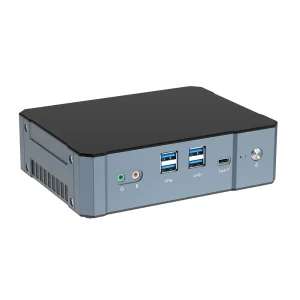
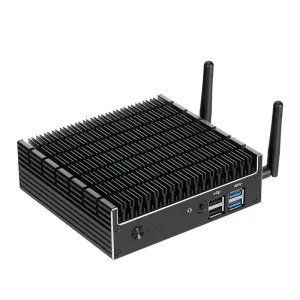
Fanless chassis (such as the GM1 or MU01 series) utilize passive heat transfer. The entire casing is designed as a large heatsink. Internal copper plates contact the CPU/SoC and route thermal energy via heat pipes to external fins machined directly onto the chassis surface. This creates convection cooling without moving parts, eliminating noise and dust intake.
Yes. Using advanced modular tooling inserts and CNC post-machining processes, we can modify port configurations (adding HDMI, DisplayPort, dual Ethernet, or medical-grade DIN connectors) on existing chassis tooling. This keeps design setup costs low and accelerates the path to production.
For hazardous, heavy industrial, or outdoor use, casings should meet MIL-STD-810H standards and carry IP ratings (such as IP54 or IP65). This ensures the casing handles drops, mechanical vibration, extreme temperatures, and high humidity, safeguarding internal circuitry.
We apply a unique QR code birth log to every machine before it leaves our Shenzhen facility. By scanning this code, buyers can review the production records, trace raw materials, view assembly logs, inspect testing records, and verify assembly tech signatures, ensuring strict accountability.
Unlike large-scale manufacturers requiring huge minimum orders, we work with flexible MOQ policies. We support specialized systems integrators and startups by offering custom color anodization, logo etching, and custom I/O plates on orders starting as low as 1 unit.
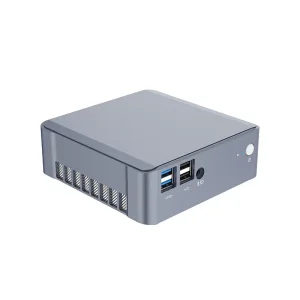
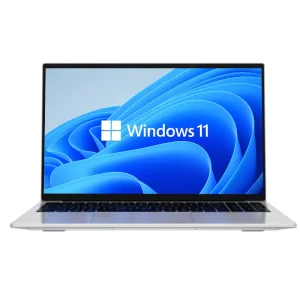
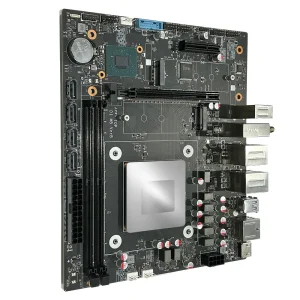
Discover our industrial fanless mini computers, large business laptops, dual-screen setups, and custom motherboard offerings designed for reliable operation.
 JingHong Device